United States
Bengal
The Bengal is a domestic cat that looks like a miniature leopard. Discover everything about this energetic, intelligent breed, from their wild history to their unique care requirements.
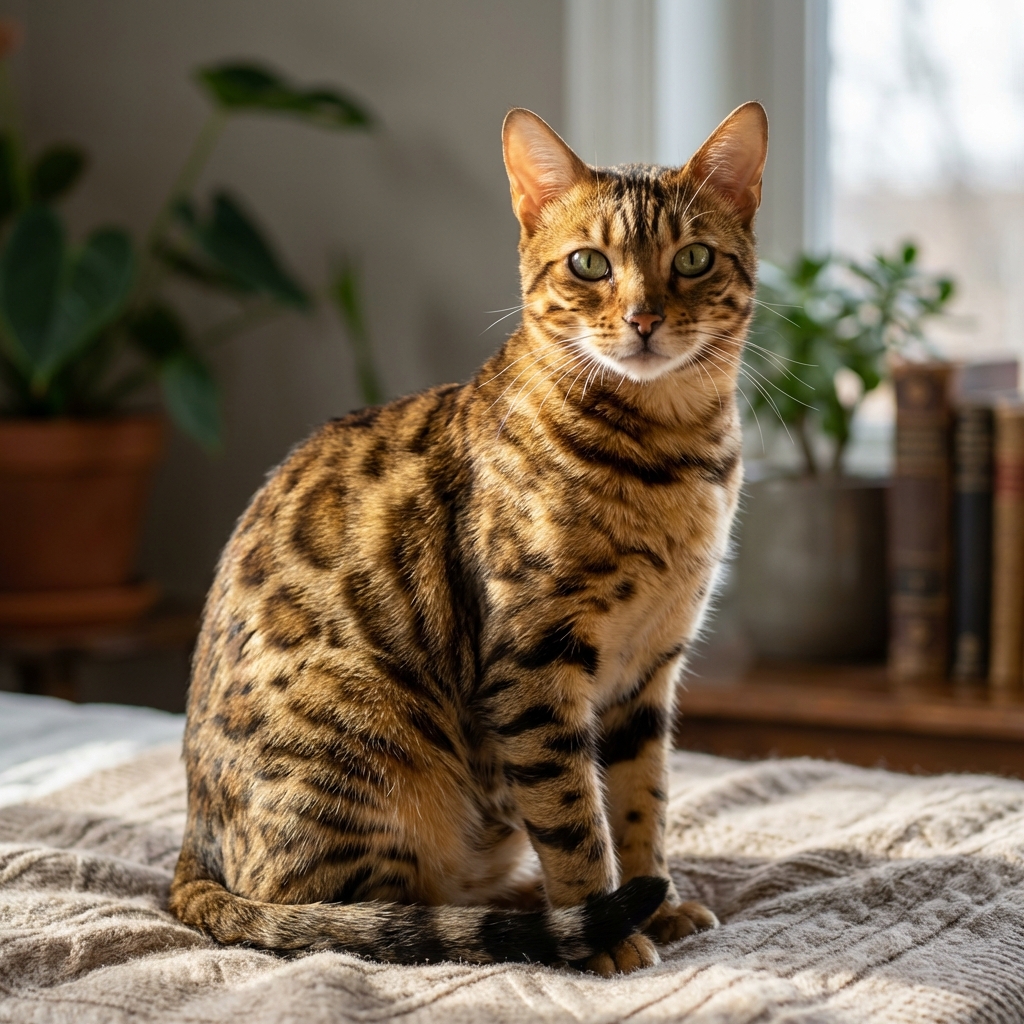
The Bengal cat combines the exotic appearance of a wild jungle cat with the temperament of a domestic pet. This article covers the Bengal breed’s origins, health concerns, personality, and care requirements.
1. History and Origins: From Wild to Mild
While there were anecdotal reports of Asian Leopard Cat × Domestic Cat hybrids as early as the late 1800s, the breed as we know it began in earnest in the 1960s.
The Vision of Jean Mill
Jean Mill, a California-based geneticist, is credited as the founder of the modern Bengal breed. In 1963, she successfully crossed a domestic black tomcat with a female Asian Leopard Cat (Prionailurus bengalensis). Her goal was to crusade against the fur trade and the keeping of wild animals as pets. She believed that if people could own a cat that looked like a leopard but acted like a sweet house cat, they would be less inclined to poach wild cats for their fur or capture them for the exotic pet trade.
The Road to Recognition
It wasn’t an easy path. Early hybrids (called F1, F2, and F3 generations) often retained wild behaviors. It takes at least four generations (F4) of breeding away from the wild ancestor to produce a Bengal with a reliably domestic temperament. The International Cat Association (TICA) accepted the Bengal for championship status in 1991.
2. Appearance: A Leopard for Your Living Room
The most striking feature of the Bengal is its coat. It is the only domestic breed that displays the “rosette” markings found on Jaguars and Leopards.
Coat Patterns
Bengals primarily come in two patterns:
- Spotted: This is the most common. The spots can be simple solid dots, but the most prized are “rosettes”—spots with a dark outline and a lighter center.
- Marbled: This pattern looks like swirling marble or chaotic horizontal stripes. It is an abstract look derived from the “classic tabby” gene but modified to appear exotic.
Colors and Categories
While the golden/brown background with black spots is the classic look, Bengals come in several recognized colors:
- Brown: The traditional color, ranging from cool grey-browns to warm orange-golds.
- Snow: Developed to resemble the Snow Leopard. These come in three variations: Seal Lynx Point (blue eyes), Seal Mink (aqua eyes), and Seal Sepia (gold/green eyes).
- Silver: A white background with black markings, lacking any brown or golden rufous tones.
- Charcoal: A darker variation that can overlay other colors, giving a “mask” and a cape down the back.
The “Glitter” Effect
Many Bengals possess a unique trait called “glitter.” This isn’t actual glitter, but a translucent hollow hair structure that catches the light, giving the coat a shimmering, gold-dusted appearance. It feels like soft satin to the touch.
3. Personality: Not Just a Pretty Face
If you want a cat that sleeps on the sofa for 18 hours a day, do not get a Bengal. These cats are high-energy athletes with the curiosity of a toddler.
Intelligence and Curiosity
Bengals are among the smartest cat breeds. They can learn tricks, solve puzzles, and even open doors (yes, you might need child locks!). Their curiosity is insatiable; if you bring home a new box, bag, or piece of furniture, your Bengal will be the first to inspect it.
High Energy Levels
Think of a Bengal as a border collie in a cat suit. They need vigorous daily exercise.
- Climbing: They love vertical territory. Floor-to-ceiling cat trees and wall shelves are highly recommended.
- Fetching: Many Bengals naturally play fetch without being taught.
- Water: Unlike most cats, Bengals are often fascinated by water. They might paw at your aquarium, drink from the tap, or even try to join you in the tub.
Vocalization
Bengals are chatty. They don’t just meow; they chirp, trill, and howl. They will tell you when they are hungry, bored, or happy to see you. This is a charming trait for many, but something to consider if you prefer a quiet household.
4. Care and Grooming
Coat Care
Surprisingly, the coat is the easiest part of owning a Bengal. Their sleek, short fur does not mat and requires very little grooming. A weekly brushing with a rubber curry brush is enough to remove loose hairs and keep the coat shiny. Bengals are also fastidious self-groomers.
Exercise Requirements (Crucial!)
We cannot stress this enough: A bored Bengal is a destructive Bengal. You should plan for:
- At least 30 minutes of interactive play per day (wand toys, laser pointers).
- Independent puzzle feeders to keep their brains busy.
- A “cat wheel” (like a giant hamster wheel for cats). Many Bengals engage with these instantly and run for miles every day to burn off energy.
Diet and Nutrition
As an active breed, Bengals need high-quality fuel.
- High Protein: Look for wet food or high-grade kibble where meat is the first ingredient.
- Hydration: Because active cats can be prone to dehydration, a water fountain is a great investment. The running water appeals to their natural instincts.
- Raw Diets: Many breeders advocate for raw meat diets (BARF), but always consult your veterinarian to ensure a complete and balanced nutritional profile before switching.
5. Health and Genetics
Bengals are generally healthy cats, often living 12–16 years. However, like all purebreds, they are prone to specific genetic conditions.
Hypertrophic Cardiomyopathy (HCM)
This is a common heart disease in cats where the heart muscle thickens. Responsible breeders will screen their breeding cats annually via echocardiogram. Always ask a breeder for proof of HCM testing on the parents.
Progressive Retinal Atrophy (PRA-b)
This is a degenerative eye disorder that causes blindness. A DNA test exists for this condition. A reputable breeder will ensure they do not breed two carriers together.
Pyruvate Kinase Deficiency (PK Def)
A genetic disease that leads to anemia. This can also be DNA tested, and carriers can be safely bred to non-carriers without producing affected kittens.
6. Suitability: Pros and Cons
Pros
- Distinctive Appearance: The only domestic cat with true rosette markings.
- Interactive: A companion that wants to be involved in everything you do.
- Low Shedding: Their pelt-like coat sheds less than most breeds.
- Trainable: Can learn to walk on a leash and perform tricks.
Cons
- High Maintenance: Requires significant time for play and attention.
- Vocal: Can be loud, especially at night or early morning.
- Expense: Kittens typically cost $1,500–$3,000+, and they need plenty of toys and furniture.
- Mischief: Their intelligence often leads them to open cabinets, knock things over, and “redecorate” your house.
7. Frequently Asked Questions (FAQ)
Q: Are Bengals wild? A: No. A Bengal from a reputable breeder is a domestic cat (at least 4 generations removed from the Asian Leopard Cat). They eat cat food, use a litter box, and do not need a wild animal permit.
Q: Do Bengals get along with dogs? A: Yes! In fact, because of their confidence and high energy, they often bond better with dogs than with other, more timid cats.
Q: Can Bengals go outside? A: It is generally safer to keep them indoors to protect them from cars, diseases, and theft (they are high-value targets). However, many owners successfully leash-train their Bengals for safe outdoor adventures.
Q: Are they hypoallergenic? A: No cat is hypoallergenic. However, because Bengals have short coats and often groom less excessively than some other breeds (producing less saliva-coated dander), some people with mild allergies find them more tolerable.
Conclusion
Bengals demand more engagement than the average house cat. They are vocal, energetic, and endlessly curious. Owners willing to provide daily interactive play, environmental enrichment, and patience with their mischievous streak will find the Bengal to be a rewarding and entertaining companion.
Key Characteristics
- Life Span
- 12 - 16 years
- Temperament
- Energetic, Intelligent, Playful, Affectionate, Curious, Water-loving